One Jeep owner swears by a locker for every trail. Another prefers a limited-slip differential because the Jeep spends most of its life on the road. So which setup is actually better for your Jeep?
A useful answer starts with where you drive and how each system works. A locking differential can give you a big advantage in certain low-traction situations, while a limited-slip design can offer a more automatic response that suits everyday driving. Neither label tells you everything about a particular axle or vehicle.
A Jeep Differential Lets Wheels Turn At Different Speeds
In a turn, the outside wheel travels farther than the inside wheel. An open axle differential allows the speed difference while still sending torque to the wheels. But if one wheel has very little traction, the torque available through that arrangement can limit the vehicle's ability to move.
Limited-slip and locking designs tackle that limitation in different ways. Traction control can also use the brakes to influence wheelspin, but that isn't mechanically the same as locking the differential. Figure out what your Jeep actually has before you compare upgrades. Model, trim, axle, and existing electronic systems can change the equipment and the options available.
A Limited-Slip Differential Helps Manage Unequal Traction
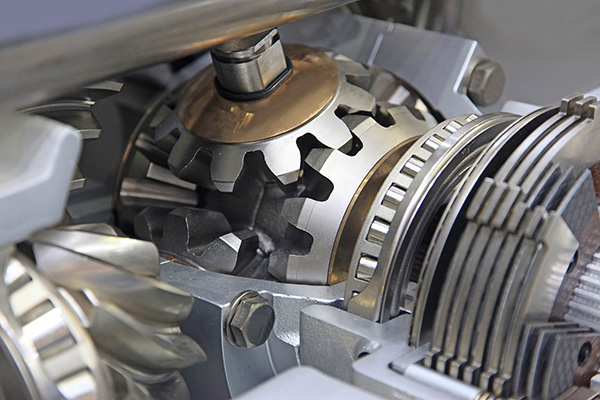
A limited-slip differential permits wheel-speed differences while limiting them or biasing torque under suitable conditions. The mechanism varies. Some designs use clutch packs, others use gears, and electronically controlled versions add another layer of control. Their behavior and service requirements aren't interchangeable.
That can suit a Jeep used on ordinary roads and the occasional loose surface, since the system responds without you manually locking an axle each time. It still has limits. Some designs need resistance at both wheels to pass along useful torque, so a wheel lifted clear of the ground can expose a weakness you'd never see on a damp paved road.
A Locking Differential Couples The Axle’s Wheel Speeds
When it's engaged, a locking differential removes the normal speed difference between the two axle shafts. That can let the wheel with useful traction keep moving the vehicle even when the other wheel has far less grip. Selectable lockers let the driver engage them when conditions allow.
The same coupling changes how the axle behaves in a turn. On a high-traction surface, the wheels need to travel different distances so that a locked axle can cause tire scrub, binding, or extra driveline stress. Follow the manufacturer's operating restrictions. A locker meant for off-road use isn't an everyday setting for dry pavement.
Jeep Locker Benefits Are Greatest In Specific Terrain
Uneven terrain can unload a wheel, and very loose surfaces can give sharply different traction across an axle. A locker helps there because it doesn't depend on the same wheel-speed difference an open differential allows. That can make a real difference during a controlled trail maneuver.
It won't create grip where the tires have none, add ground clearance, or make every obstacle a good idea for your vehicle. Front and rear lockers can also affect handling differently. Use the exact engagement procedure, speed restrictions, and axle settings for your Jeep. The controls and permissions on another model may not match yours.
Limited-Slip And Locking Differentials Suit Different Daily Needs
For a Jeep that mostly commutes around Greensboro and occasionally hits loose surfaces, a suitable limited-slip system may offer useful traction with less driver involvement. A vehicle that regularly tackles demanding trails may get more out of a selectable locker, depending on the axle and terrain.
Automatic lockers are a category of their own, with their own road behavior, so don't lump them in with factory selectable systems. Talk through how you'll really drive the Jeep instead of picking the most aggressive-sounding option. Tires, driver technique, clearance, and the rest of the driveline shape the result just as much as the differential does.
Differential Upgrades Need Compatibility And Service Planning
An upgrade has to suit the axle, gearing, vehicle controls, and intended load. Installation can involve more than fitting the differential unit, and proper setup matters for gear and bearing operation. Existing wear should be assessed before new components go in.
Questions to review before choosing a Jeep differential include:
- How much of your driving is on pavement versus demanding terrain?
- Which axle and electronic traction systems are already fitted?
- What installation, fluid, and maintenance requirements apply?
Your choice should match the whole vehicle and how you'll use it, not just one impressive traction claim.
Jeep Differential Maintenance Depends On The Design
Use the correct lubricant and follow the vehicle's service schedule. Some limited-slip systems have specific friction requirements, while other designs use different specifications. Automatically adding a friction modifier to every differential can be the wrong move. Confirm the exact requirements before any fluid service.
Leaks, new whining, binding, or a differential warning deserve an inspection. A fluid change can't restore worn gears or fix an electrical actuator fault. Tell us about recent axle work, tire changes, and the conditions that bring on the symptom. That helps us separate normal operation from a problem that needs correcting.
Get Jeep Differential Advice In Greensboro, NC, With Jeepguys
Jeepguys in Greensboro, NC, can review your Jeep's differential equipment, inspect driveline concerns, and talk through options that suit how you drive. We can explain the upkeep and practical trade-offs of locking and limited-slip designs for your vehicle.
Contact us to schedule a Jeep differential inspection or discuss a suitable upgrade.