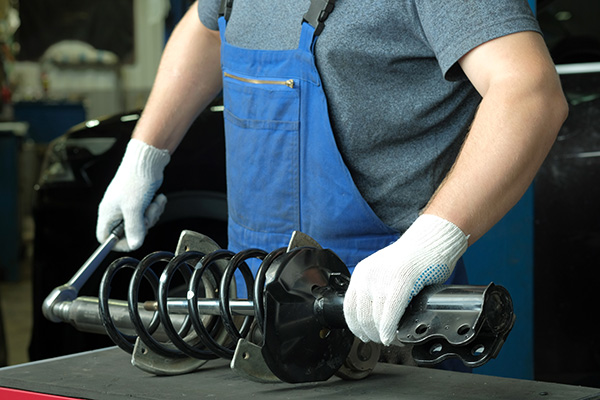
Shocks and struts do not always fail loudly or obviously. Most drivers notice the car feels different before they know which part is responsible. The ride gets bouncier, the front end dips more during braking, or the tires start wearing in strange patterns.
That change should not be brushed off as normal aging. Shocks and struts help control how the vehicle moves, how the tires meet the road, and how stable the car feels during braking, turning, and rough road driving. Once they wear out, the rest of the suspension has to work harder.
Shocks And Struts Control Vehicle Movement
Shocks and struts are designed to control spring movement. The springs carry the vehicle’s weight and absorb road impact, while the shocks and struts keep that motion from continuing too long. Without that control, the vehicle would keep bouncing after every bump.
When these parts wear, the vehicle starts moving more than it should. You might feel extra bounce after hitting a dip, more body roll in turns, or a floaty feeling at highway speed. The car may still be drivable, but it is no longer as settled as it should be.
Tires Can Lose Steady Contact With The Road
Your tires need consistent contact with the pavement to brake, steer, and grip properly. Worn shocks and struts allow the tires to bounce or chatter over uneven surfaces. That reduces how well the tires stay planted, especially on rough roads or during quick maneuvers.
The result can be less confident handling, longer stopping distance, and more tire noise. On wet roads, weak suspension control can make the vehicle feel less predictable because the tires are not being pressed into the road as evenly. Good tires help, but they cannot fully make up for worn suspension control.
Braking Can Feel Less Stable
When shocks and struts are weak, the vehicle’s weight shifts more during braking. The front end can dive harder than it should, and the rear of the vehicle may feel lighter. That extra movement changes how the tires and brakes work together.
Drivers may notice the car nosing down during stops, taking longer to settle, or feeling unstable when braking on uneven pavement. The brakes may still be in good shape, but the suspension is no longer helping the vehicle stay controlled. That is why brake complaints and suspension wear sometimes show up together.
Uneven Tire Wear Is A Common Clue
Worn shocks and struts can leave clear evidence on the tires. Cupping, patchy wear, feathering, or tread that looks uneven across the surface can all point toward suspension trouble. The tire is not rolling against the road with steady pressure, so the tread wears in an irregular pattern.
Alignment problems can also cause uneven tire wear, so it is important not to blame a single part too quickly. A proper inspection can determine whether the issue stems from worn shocks, struts, steering parts, alignment angles, tire pressure, or a combination of factors. Catching the pattern early can help save the tires before the wear becomes permanent.
Other Suspension Parts Take Extra Stress
A worn shock or strut does not work alone. Once it stops controlling movement well, other suspension parts deal with more vibration, impact, and shifting weight. Control arm bushings, ball joints, sway bar links, mounts, and tires can all feel that extra stress.
That is why delayed suspension repair can escalate beyond a single worn component. A loose or tired suspension system can start making clunks, rattles, and steering complaints as nearby parts wear faster. Regular maintenance helps catch those early changes before the repair list gets longer.
Struts Can Affect Alignment And Steering Feel
Struts are structural suspension parts on many vehicles. They help support the vehicle and influence the position of the wheel. When struts wear or are replaced, alignment can be affected, depending on the design.
Weak struts can make the steering feel less direct. The vehicle may wander, lean more in turns, or feel less settled over bumps. If the steering wheel is off-center, the car pulls, or the tires are wearing unevenly, the suspension and alignment should be checked together. Looking at only one part of the system can miss the full reason the vehicle feels different.
When Shocks And Struts Should Be Checked
Mileage is one clue, but it is not the only one. Driving on rough roads, carrying heavy loads, off-road use, pothole impacts, and years of heat and moisture can all wear shocks and struts faster. A vehicle with higher mileage should have these parts checked even if the symptoms are still mild.
Good warning signs include bouncing after bumps, clunking, front-end dive, uneven tire wear, fluid leaking from a shock or strut, and a ride that feels less controlled than before. If the vehicle has started feeling different, there is a reason. Waiting until the suspension feels terrible usually means other parts have already been affected.
Get Suspension Service In Greensboro, NC, With Jeepguys
If your vehicle feels bouncy, unstable, noisy, or is wearing tires unevenly, Jeepguys in Greensboro, NC, can check the shocks, struts, steering parts, and suspension system.
To restore better control and prevent extra wear on nearby parts, contact us to schedule an appointment.